

Are you tired of the 9-to-5 grind, watching your savings barely grow while your financial goals seem to drift further away? It’s time to stop trading your valuable time for money and start making your money work for you. Real estate investing in New Zealand isn’t just about buying houses; it’s a powerful vehicle for building generational wealth, creating passive income, and achieving true financial freedom. This guide will teach you the essential strategies to start your journey and build your own property empire.
Beyond rentals and flips lie more advanced strategies like property development (building new homes) and investing in commercial real estate (offices, retail spaces). While potentially very lucrative, these methods involve higher complexity, greater capital requirements, and increased risk, making it important to learn more about Commercial Real Estate Investments. They are typically pursued by experienced investors who have already built a solid foundation and capital base through other strategies. It’s wise to master one core strategy first before diversifying into these more complex areas.
Why Real Estate Investing is Your Path to Financial Freedom
To truly build wealth, you need to shift your mindset from being an employee to being an owner. Real estate allows you to do just that. It’s about acquiring assets that generate income and appreciate in value, creating a positive cycle that builds your net worth even while you sleep. The real power lies in leverage-using the bank’s money to control a significant asset, which magnifies your returns. By taking control of your financial future, you transition from simply earning a living to designing a life. You become the CEO of your own property portfolio-a Property CEO.
The Problem with Traditional Wealth Creation
For decades, the standard advice has been to work hard, save money, and invest in your KiwiSaver. While these are sound principles, they often fall short of creating true freedom. A 9-5 salary has a built-in ceiling, limiting your earning potential to the hours you can work. Meanwhile, inflation quietly erodes the purchasing power of the money you’ve saved in the bank, meaning you have to run faster just to stay in the same place. While KiwiSaver is an essential tool for retirement, relying on it alone might not provide the lifestyle you truly desire when you finally stop working.
Key Benefits of Investing in New Zealand Property
Property investing offers a unique combination of benefits that are difficult to find in other asset classes:
- Leverage: This is the cornerstone of rapid wealth creation in property. You can control a $700,000 asset with a deposit of just $140,000 (or sometimes less, using existing equity). This means your gains are calculated on the full value of the property, not just your initial investment.
- Equity Growth: As you pay down your mortgage and the property market appreciates over time, your equity-the portion of the property you truly own-grows. In essence, your tenants and the market are collaborating to build your net worth.
- Cash Flow: A well-chosen investment property can generate a positive cash flow, meaning the rental income covers the mortgage, rates, insurance, and other expenses, leaving you with a profit each month. This creates a reliable, passive income stream to supplement or even replace your salary.
- Tangible Asset: Unlike stocks or cryptocurrencies, property is a physical asset you can see, touch, and improve. You have a level of control over its value through renovations and strategic management that is impossible with intangible investments.
Core Real Estate Investing Strategies in New Zealand
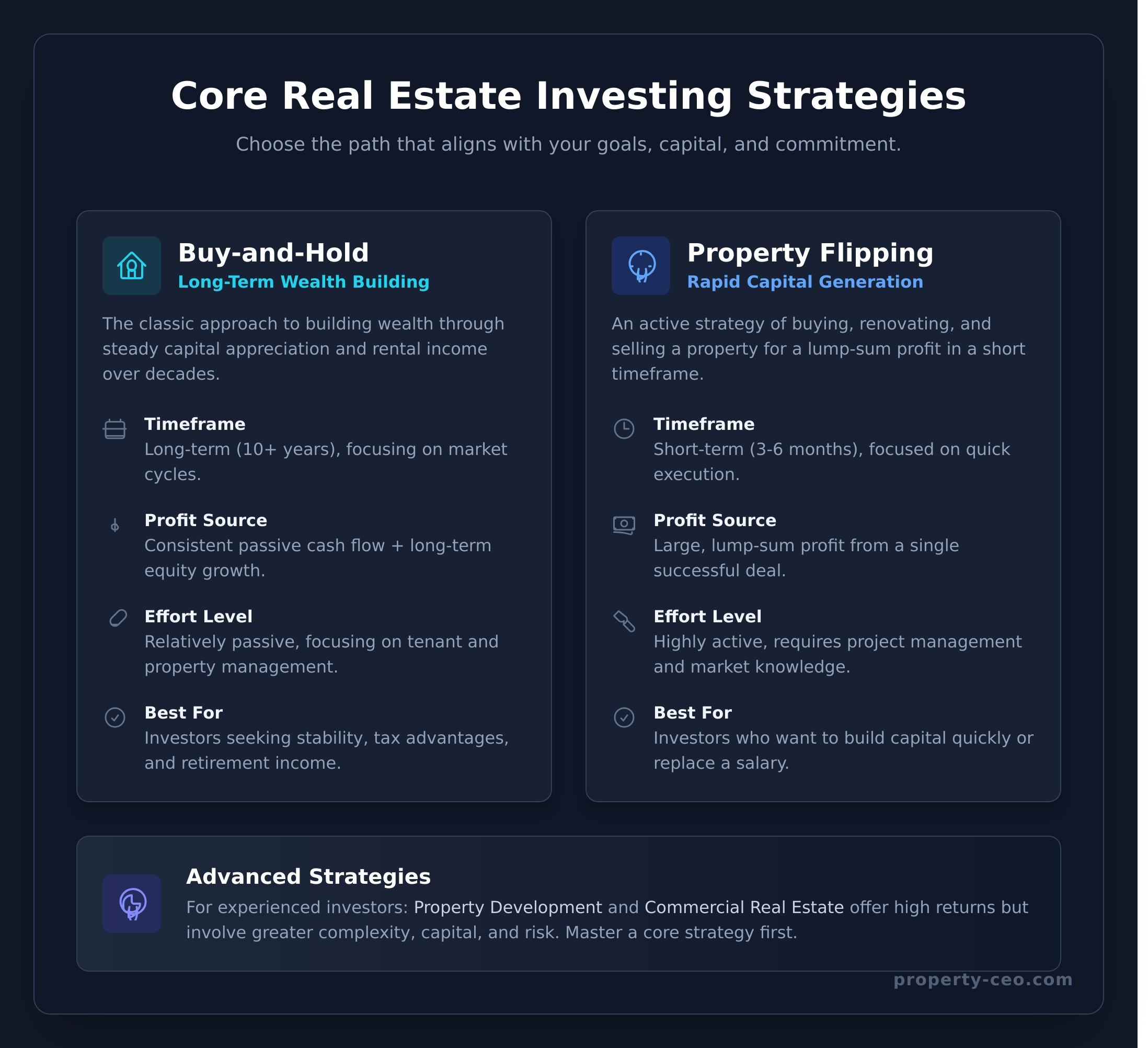
Your path in property investing should align with your personal goals, available capital, and how much time you can commit. There’s no single “best” strategy, only the one that’s right for you. Before you start, it’s crucial to understand the most common approaches, as each carries different risks, rewards, and requires a different level of active involvement. Let’s compare the most popular strategies.
The Buy-and-Hold Strategy (Rental Properties)
This is the classic, long-term approach to real estate investing. The primary goal is to purchase a property and hold onto it for an extended period, often decades. Wealth is built through steady capital appreciation and consistent monthly cash flow from rental income. This strategy is best suited for investors seeking stability, tax advantages, and a relatively passive income stream to fund their retirement. However, it requires you to be comfortable with the responsibilities of being a landlord, including tenant management and ongoing property maintenance.
Property Flipping (Buy, Renovate, Sell)
Property flipping is an active strategy designed to generate large, lump-sum profits in a much shorter timeframe, typically 3-6 months. The goal is to find an undervalued property, add value through strategic renovations, and sell it for a significant profit. This approach is ideal for those who want to build capital quickly or generate enough cash to replace their annual salary from just one or two successful deals. It’s the fastest way to create cash “on demand,” but it requires a proven system for finding the right deals, managing renovations, and selling effectively. To see how it’s done, see how our members flip properties for profit.
Other Strategies: Development and Commercial Property
Beyond rentals and flips lie more advanced strategies like property development (building new homes) and investing in commercial real estate (offices, retail spaces). While potentially very lucrative, these methods involve higher complexity, greater capital requirements, and increased risk. They are typically pursued by experienced investors who have already built a solid foundation and capital base through other strategies. It’s wise to master one core strategy first before diversifying into these more complex areas.
Your First 5 Steps to Becoming a Property CEO
Success in real estate investing is not about luck; it’s about following a proven, step-by-step framework. These foundational steps are designed to move you from analysis to action, setting you up for a successful first deal. The goal isn’t just to buy a single property; it’s to build a scalable property business with you at the helm.
Step 1: Define Your ‘Why’ and Set Clear Goals
Before you look at a single listing, you must understand your motivation. What does financial freedom truly mean to you? Is it more time with family? The ability to travel? Or simply the security of not worrying about bills? Define your “why,” then translate it into specific, measurable goals. How much passive income do you want per month? How many properties do you want in your portfolio in five years? This clarity will be the fuel that drives every decision you make.
Step 2: Get Your Finances in Order
Property investing is a numbers game, and it starts with your own finances. You need a clear picture of your borrowing power and how much deposit you can access. The best first step is to connect with a mortgage broker who specialises in working with investors, as they understand how to structure lending for growth. Your goal is to set up your finances not just for one property, but to allow you to scale your portfolio over time.
Step 3: Build Your Professional Team
No successful investor works in isolation. You need a team of trusted professionals in your corner. This includes a great mortgage broker, a sharp lawyer, and a savvy accountant who understands property tax laws. However, the most crucial team member, especially when you’re starting out, is a mentor or coach. Leveraging their experience is the single best way to accelerate your progress and avoid the costly mistakes that plague most beginners.
Step 4: Learn How to Find and Analyze Deals
The profit is made when you buy, not when you sell. This means learning the skill of finding undervalued properties that other people miss. More importantly, you must learn how to analyze the numbers on a potential deal quickly and accurately. Whether it’s a rental or a flip, you need to know your purchase price, renovation costs, holding costs, and potential end value or rental return. This is a skill that, once mastered, will serve you for your entire investing career.
Common Mistakes That Trap New Investors (And How to Avoid Them)
The path to becoming a property investor is littered with potential pitfalls. Many aspiring investors get derailed by common, avoidable mistakes. Knowing what these traps are is the first step to sidestepping them and ensuring your journey is a successful one. A smart investor doesn’t have to make all the mistakes themselves; they learn from the experiences of others.
Mistake #1: Analysis Paralysis
This is the silent killer of property dreams. It’s the state of being stuck in an endless loop of research, spreadsheets, and “what-if” scenarios without ever taking decisive action. It’s often driven by a fear of making the wrong choice. The antidote is having a clear, proven plan and the confidence to execute it. A good system removes guesswork and empowers you to move forward.
Mistake #2: Underestimating Costs
Many beginners focus only on the purchase price and forget about the other significant expenses. Renovation budgets can easily blow out, and holding costs-like mortgage payments, insurance, and rates during a flip-can eat into profits if not accurately calculated. A detailed, conservative budget is non-negotiable for every single project you undertake.
Mistake #3: Going It Alone
The biggest mistake is thinking you can figure everything out on your own through trial and error. The property market is an expensive place to learn lessons the hard way. The value of a supportive community and experienced mentorship cannot be overstated. They provide accountability, guidance, and a proven system to follow so you don’t have to reinvent the wheel. If you want to go far, go together. Don’t go it alone; join a community that’s got your back. Request a free call.
Frequently Asked Questions
How much money do I need to start real estate investing in NZ?
This depends on the strategy and location, but generally, you’ll need a deposit of at least 20% for an investment property mortgage. You can also use the equity in your existing home. It’s crucial to talk to a mortgage broker to understand your specific financial position.
Is property still a good investment in the current New Zealand market?
Yes. While markets fluctuate, the long-term fundamentals of New Zealand property remain strong due to consistent demand and limited supply. Successful investors make money in all market conditions by finding good deals and adding value, rather than just waiting for the market to rise.
Can I invest in property while working a demanding full-time job?
Absolutely. Many successful investors start while working full-time. The key is to use proven systems and build a reliable team to leverage your time effectively. Strategies like property flipping can be managed around a job, and long-term rentals become largely passive once set up with a good property manager.
What is better for a beginner: flipping houses or buying a rental?
It depends on your goals. If your goal is to build long-term passive income and wealth, a buy-and-hold rental is a great start. If your goal is to generate large chunks of cash to build capital or replace your income faster, property flipping with a proven system is more effective.
How do I find a good investment property to buy?
Finding good deals is a skill. It involves looking beyond the main real estate portals, building networks with agents, and learning how to spot properties with untapped potential that others overlook. This is a core part of any good investor training.
What kind of returns can I realistically expect from property investing?
Returns vary widely based on the strategy, deal, and market. For rentals, you’ll see returns from monthly cash flow and long-term capital growth. For flips, successful investors often target a profit equivalent to a full year’s salary from a single deal by focusing on adding significant value.
The path to financial freedom is not a secret; it’s a system. By choosing the right strategy, building a strong team, and taking consistent, educated action, you can transform your financial future. You have the potential to build a robust property portfolio that provides security, passive income, and the life you’ve always wanted. Join a community of over 250 active NZ investors who have completed over $100M in successful property deals and are on the same journey as you. Stop waiting for someday and start building your empire today. Ready to become a Property CEO? Request a Free Strategy Call and we’ll show you the exact steps to get started.